


Chess, Chess Culture, News, Non classé
Investing in a chess set: the example of ivory (banned in France)
20
Apr
Apr
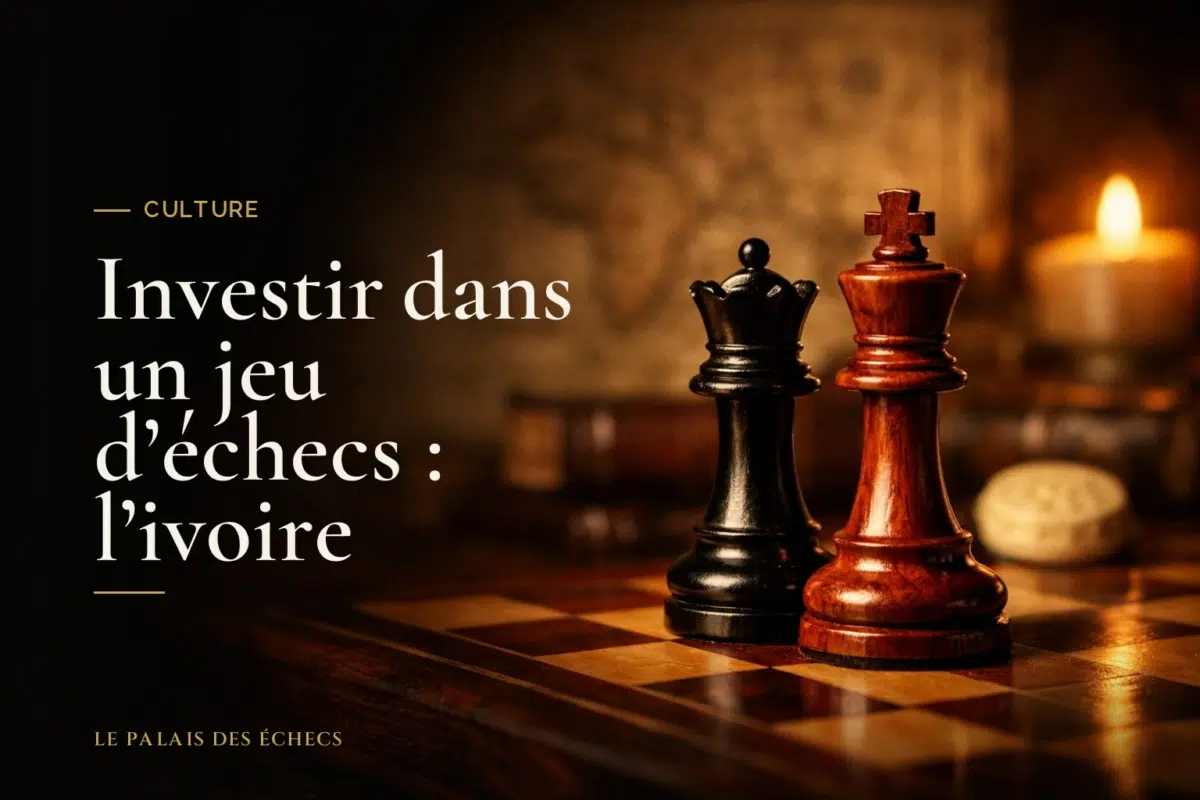
Can a chess set be an investment? Take ivory, for instance. The price of an antique ivory chess set can now reach thousands of euros, now banned in favour of precious woods that improve with age. Discover the heritage value of collectible chess boards. An antique ivory chess board is a museum piece.
Ivory: a banned and controversial material
For centuries, ivory was the noble material par excellence for chess pieces. The famous Lewis chessmen (12th century), carved from walrus ivory, are now on display at the British Museum and are worth millions.
Since 1989, international trade in elephant ivory has been banned under the CITES convention. In France, legislation has been even stricter since 2016: the sale of ivory objects is almost entirely banned, even for antique pieces, except for very limited exemptions for objects dating from before 1947 and accompanied by a certificate.
Please note: buying, selling or transporting ivory without authorisation is a criminal offence carrying heavy fines and prison sentences. If you own an antique ivory chess set, consult an accredited expert before any transaction.
Which chess sets increase in value?
While ivory is no longer an option, other materials and criteria can turn a chess set into a genuine heritage investment:
Rare precious woods
Ebony, Madagascan rosewood, Deccan boxwood, padauk. These species are becoming scarcer and their price rises steadily. A solid ebony set bought today will be worth more in 20 years.
Craftsmanship
A set turned and carved by hand by a master craftsman has a higher value than an industrially produced one. The craftsman’s signature adds a collector’s premium.
Limited editions
Numbered sets produced in limited series retain and increase their value, especially once production ends.
Historical provenance
A set that once belonged to a famous player or was used at a historic event can fetch astronomical prices at auction.
Materials that gain in value
| Material | Price trend | Why |
|---|---|---|
| Genuine ebony | ↑ sharp rise | Scarcity, growing export bans |
| Rosewood | ↑ steady rise | CITES Appendix II, restricted harvesting |
| Deccan boxwood | ↑ moderate rise | Exceptional quality, limited supply |
| Bronze and precious metals | → stable to rising | Raw material prices, craftsmanship |
| Collector’s resin | → stable | Limited editions, end of production |
Discover our chess sets in precious woods, made from the world’s finest timbers.
How to assess the value of a chess set
For a detailed analysis of prices, see our guide: what is the price of a fine chess set. The valuation criteria are:
The 5 valuation criteria: 1) Rarity of the material. 2) Quality of craftsmanship (hand-made vs machine-made). 3) State of preservation. 4) Provenance and history. 5) Number of copies produced. A set that meets all 5 criteria is a safe investment.
Preserving and caring for a collector’s set
A collector’s set deserves careful upkeep to preserve its value:
Preservation rules: store away from direct light and humidity. Use a padded box for the pieces. Clean the wood with a soft, slightly damp cloth, without chemical products. For metal, use a suitable, non-abrasive product.
Our supreme sets come with premium storage boxes, designed for long-term preservation.
A fine chess set is like a great wine: it gains value with time, provided it is well cared for.
— Le Palais des ÉchecsInvest in the exceptional
Our precious wood sets and limited editions are heritage investments as much as objects of pleasure.
See our precious woods
Chess players: why memory is your best ally on the board
The role of memory in becoming a good chess player The chessboard, that 64-square battlefield [...]
Xiangqi: discovering the traditional Chinese chess game
Xiangqi is the Chinese chess game, played by hundreds of millions of players across China [...]
The best Staunton chess sets: selection and size guide
We've put together a list of our best Staunton chess sets, from finely crafted pieces [...]