




Mate in 2
Chess Puzzle No. 277: One move leaves the black king with nowhere to run
03
Oct
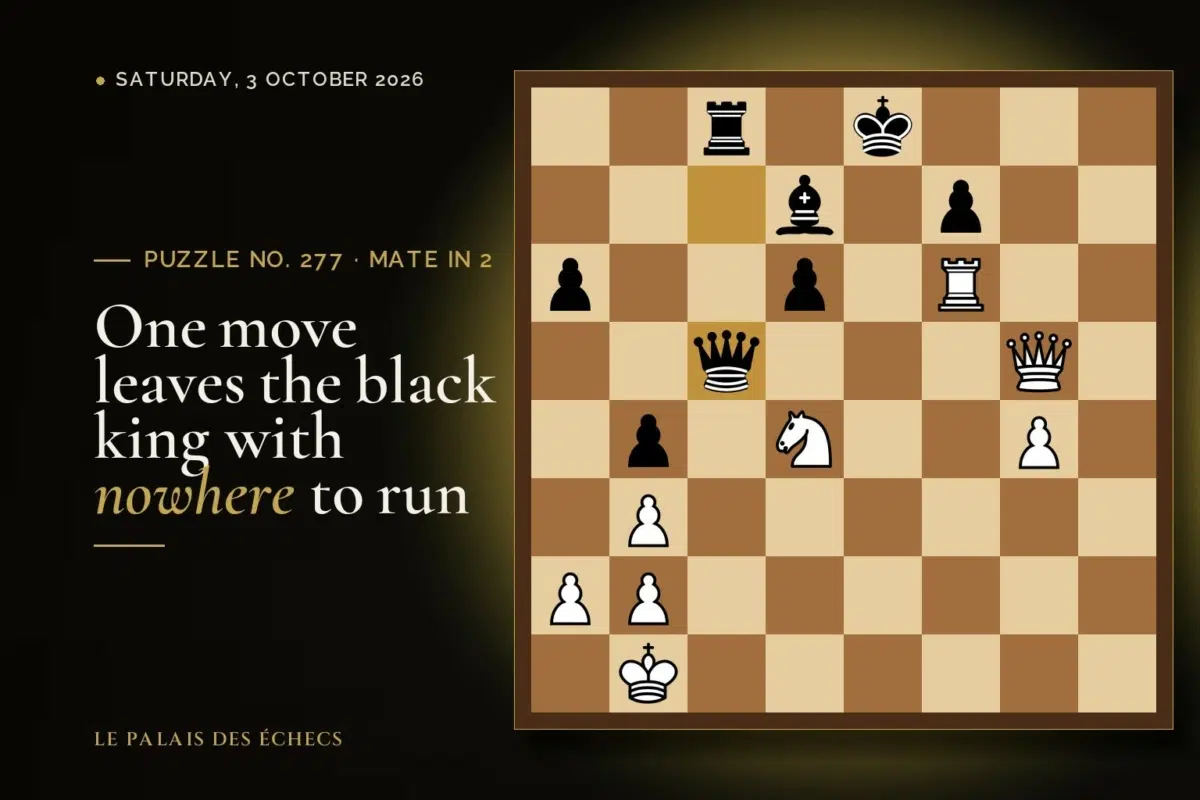
In August 2018, during a 10+0 rapid game between players rated around 1850, following a Sicilian Defence (Dragon Variation, Yugoslav Attack), White plays their 29th move after Qc5. Now it's your turn to find the forced continuation.
Mate in 2ExpertWhite to play
White to play and mate in 2

Puzzle: Lichess open database (CC0) · Pieces: Cburnett, Wikimedia (CC BY-SA 3.0)
See the solution explained
Qg8+ puts the black king in check and leaves only one legal reply.
Black must play Ke7, the king moving to the only available square.
Rxf7# captures the pawn on f7 with check: the black king, now on e7, is in check and cannot escape. It’s checkmate.
In the actual game, the solver did find Qg8+, but then played Qxf7+ instead of the rook, letting the immediate mate slip away; the game eventually ended in resignation and a loss. Remember the motif: a queen forces the king onto a precise square so the rook can deliver checkmate.
The Sicilian Dragon, with its Yugoslav Attack, is one of the sharpest openings in chess history, played by Fischer and countless Soviet masters throughout the 1960s and 70s. This aggressive style of play comes into its own on a chess board with built-in storage, handy for keeping complex positions safe between analysis sessions.

 Polski
The top 5 Disney chess sets
Chess makes you think hard. Created in India in the sixth century, this game requires [...]
Draughts vs chess: the differences between the two strategy games
Draughts board or chessboard, 20 pieces or 16: discover the real differences between draughts and [...]
The history of chess: from Indian origins to the digital age
Chess was invented in India in the 6th century under the name chaturanga. Born more [...]