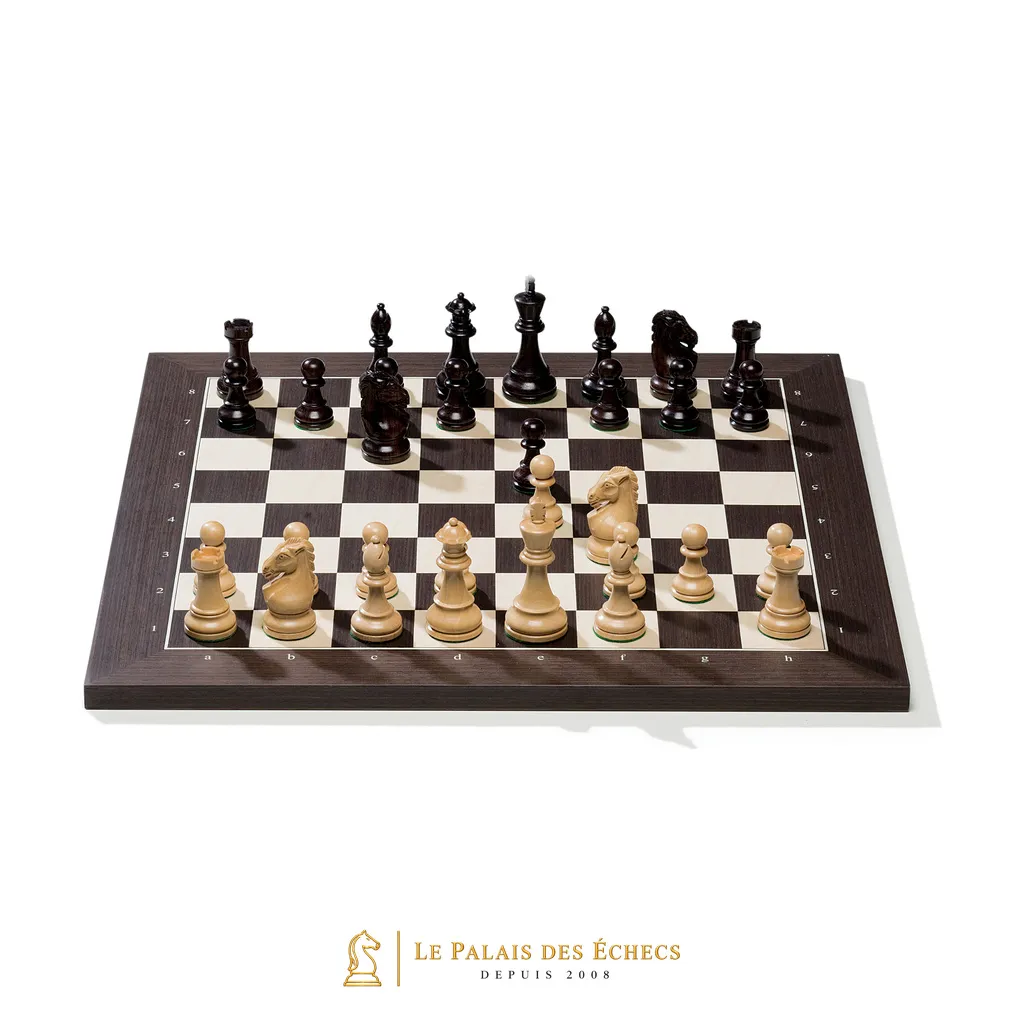
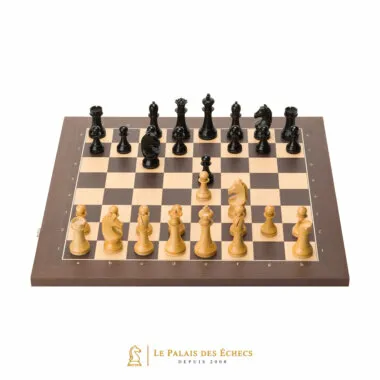
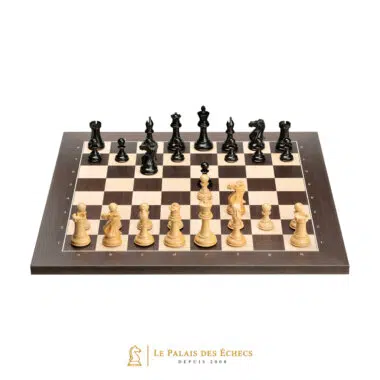
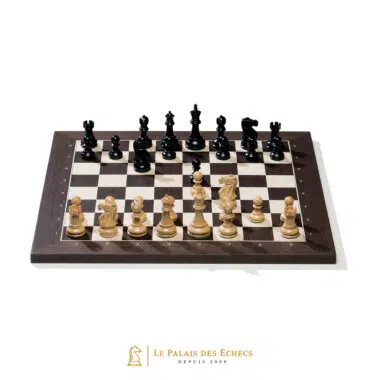
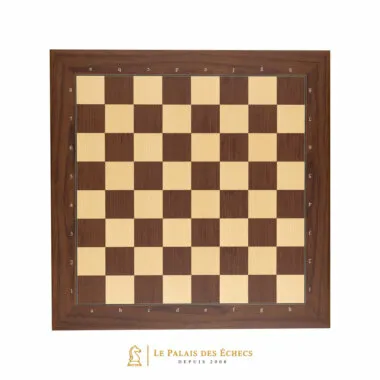
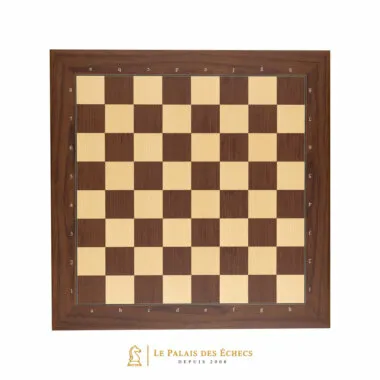
Wenge, with coordinates
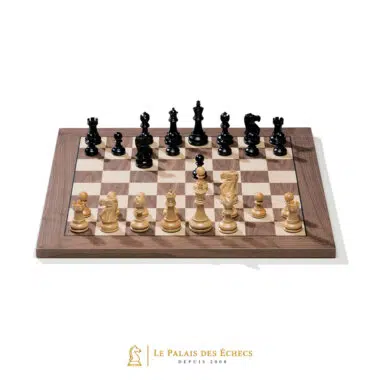
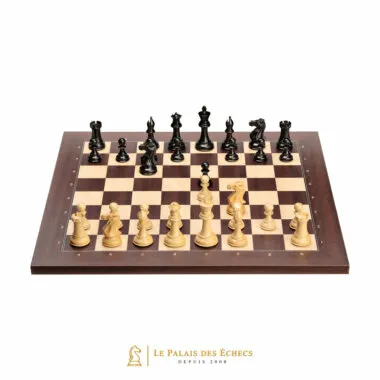
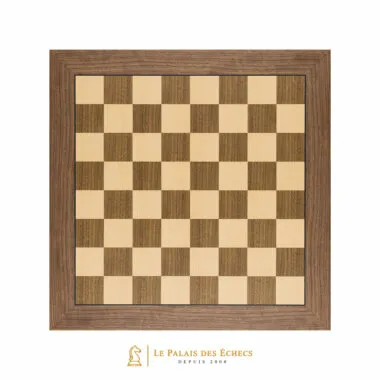
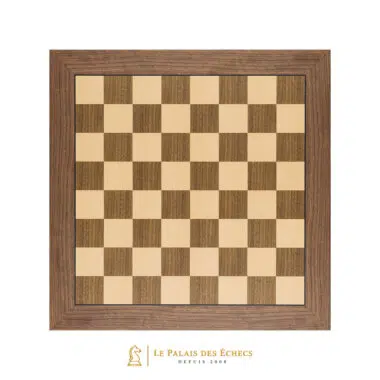
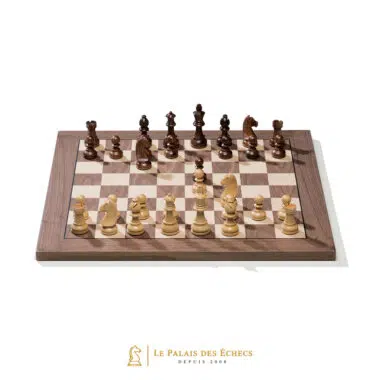
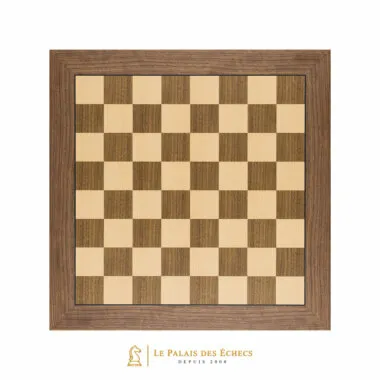
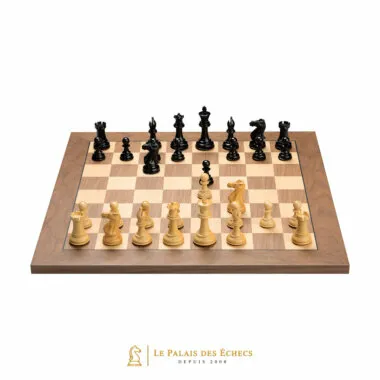
The DGT tournament board comes in walnut, rosewood (palisander) and wenge. Wenge, dark in colour, carries coordinates around its edge, as rosewood does; walnut does not. Dimensions, electronics and connections remain the same across all three woods.
What a tournament e-Board is for
The board recognises the pieces placed on it and records the moves. What sets it apart from the USB e-Boards in the range is that it can be linked to other boards to form a chain, itself connected to a computer's USB or serial port. With LiveChess, DGT's free software, an organiser can record every game in the room and broadcast them live, on screens or online. A single chain can mix wooden boards and plastic Smart Boards.
At home, with a single board
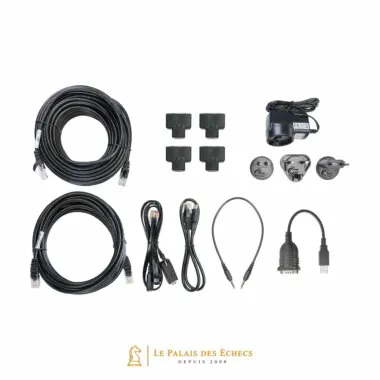
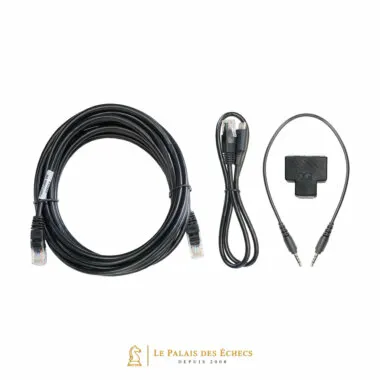
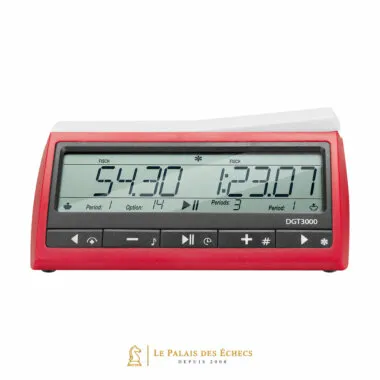
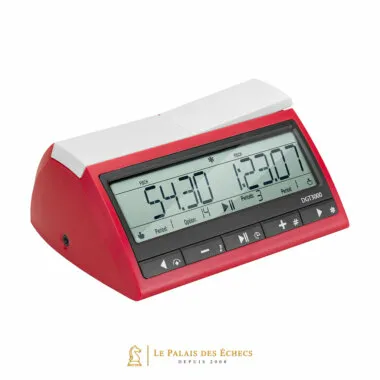
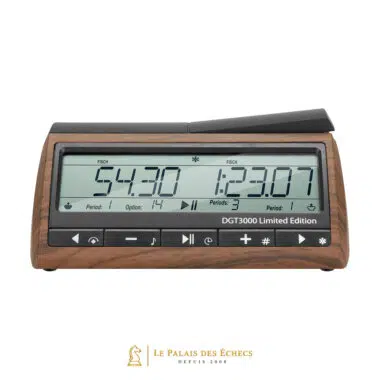
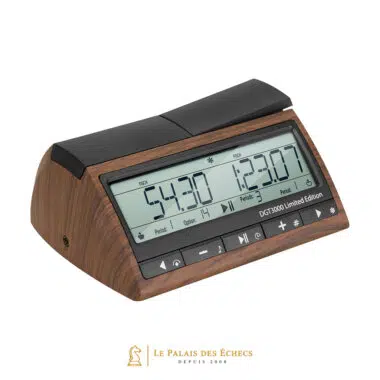
Without the connection kit for the first board (DGT 25002), the board receives neither power nor a connection. With this kit, it does everything you would expect from an individual e-Board: recording your games, playing against a program or online, and accepting a DGT 3000 or a DGT Pi. Only adding it to a chain requires more. While powered, it stores around 500 moves, which LiveChess then exports in PGN format; unplug it while setting up and putting away the pieces, so as to keep the memory free for the game. Fritz software is not included.
Organising a tournament
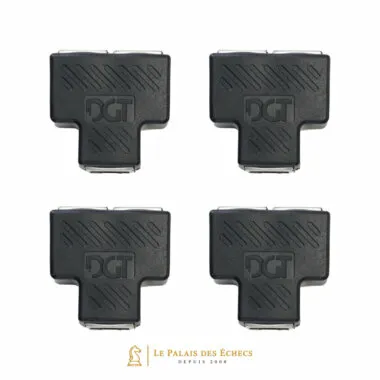
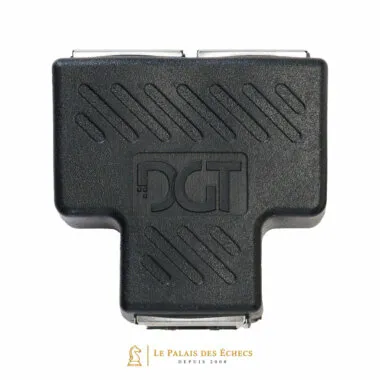
The first-board kit, with its power supply, serves a chain of up to 12 chess boards. Each of the other 11 requires an additional kit (DGT 25003). To go beyond this, a second chain starts with a new first-board kit. The board's USB-C socket stays discreet on the table, and its power consumption is low.
Precautions and limitations
A metal table top, or one resting on a metal frame, can disrupt piece detection, as can a screen, a loudspeaker or a power supply placed too close. If you never plan to form a chain, the USB e-Boards in the range do without a connection kit.


















 Français (Belgique)
 Français (Canada)
 Français (Luxembourg)
 Français (Suisse)
 Deutsch (Österreich)