




Board Games, Chess, Chess Culture, Learn Chess, News, Non classé
Shogi: discovering Japanese chess and its unique rules
05
Jan
Jan
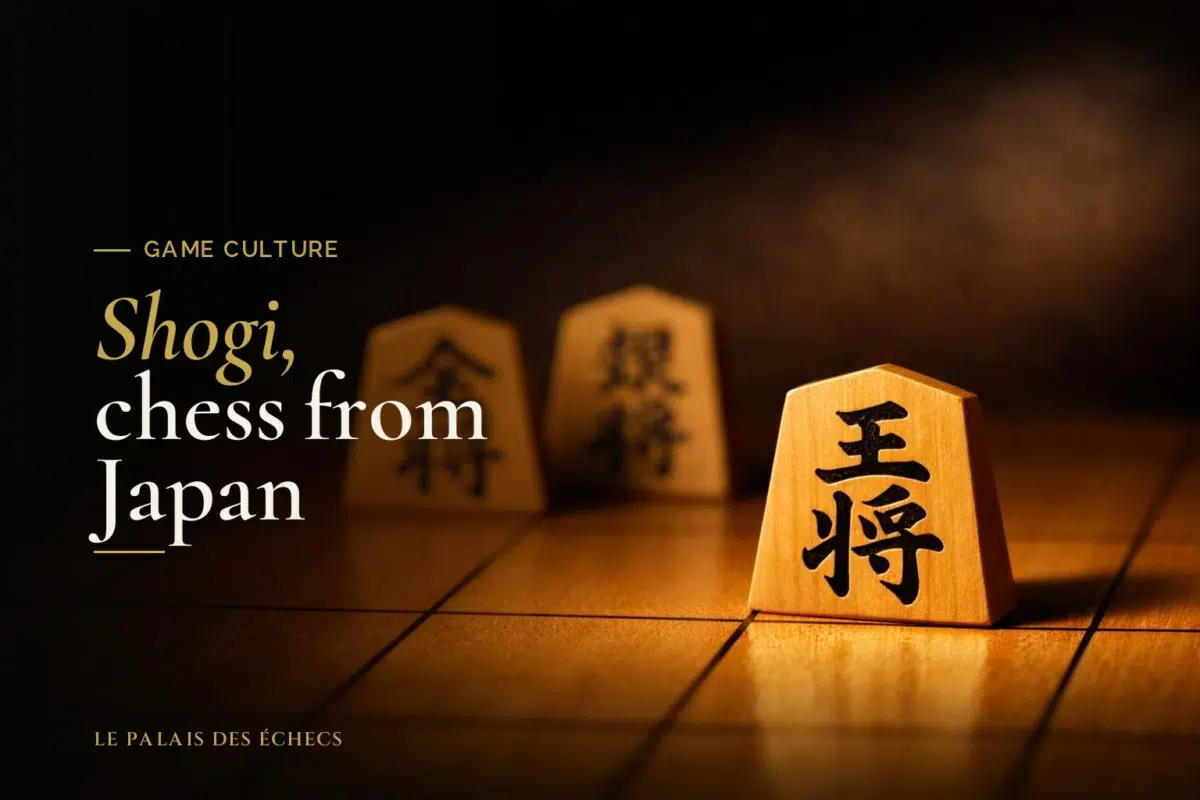
Shogi is the Japanese chess game: a variant played on a 9 by 9 square board, with 20 pieces per player, whose most distinctive rule allows you to drop captured pieces back onto the board. Like Western chess and Chinese Xiangqi, it descends from the ancient Indian game of chaturanga, and took its current form in Japan during the Edo period (1603-1868). Here are its essential rules and what truly sets it apart from the chess played in Europe.
Updated on 14 November 2026 · By Delphine D., Le Palais des Échecs editorial team
The essentials
• Board and pieces: 9×9 squares (81 squares), 20 pieces per player, 40 in total.
• The unique rule: any captured piece changes side and can be dropped back onto the board.
• No queen: Shogi has no piece equivalent to the chess queen.
• Promotion: a piece that enters the opponent’s last 3 rows can flip over and gain power.
• Common origin: like chess and Chinese Xiangqi, Shogi descends from Indian chaturanga.
• At Le Palais des Échecs: we don’t sell Shogi sets, but our Samurai chess sets bring feudal Japan onto a Western chessboard.
Update of 14 November 2026: complete overhaul of the article, new illustrations.
What is Shogi? Origins and history of Japanese chess
Shogi belongs to the great family of chess games, alongside Chinese Xiangqi and Western chess: all descend from a common ancestor, chaturanga, which appeared in India before spreading across Asia and then Europe. The game is thought to have reached Japan via China, where it evolved over the centuries to give rise to its most distinctive rule: dropping captured pieces back into play.
Shogi took its current form during the Edo period (1603-1868): the best players were then sponsored by the shogunate and competed in closely followed official games. This tradition has continued: professional Shogi remains a widely followed game in Japan today, with its own titles and ceremonies. To place Shogi within the broader history of chess, our article on the history of chess traces this shared lineage, and our guide to Xiangqi, traditional Chinese chess, lets you compare the three branches of this family.
Shogi rules explained simply
Shogi is played on a 9 by 9 square board, 81 squares in all, with 20 pieces per player: a king, a rook, a bishop, two gold generals, two silver generals, two knights, two lances and nine pawns. Each piece has its own movement, sometimes close to that of Western chess, often more limited.
The Shogi board and pieces
| Piece | Japanese name | Qty | Movement | Promotes to |
|---|---|---|---|---|
| King | Gyoku / Ou | 1 | 1 square in all directions | — (does not promote) |
| Rook | Hisha | 1 | Straight lines, unlimited | Dragon King (+ 1 square diagonally) |
| Bishop | Kaku | 1 | Diagonals, unlimited | Dragon Horse (+ 1 square in line) |
| Gold General | Kin | 2 | 1 square: forward, sideways, forward diagonals, backward | — (does not promote) |
| Silver General | Gin | 2 | 1 square: forward and diagonally | Gold General |
| Knight | Keima | 2 | L-shaped jump, forward only | Gold General |
| Lance | Kyosha | 2 | Straight ahead, unlimited | Gold General |
| Pawn | Fuhyo | 9 | 1 square forward | Tokin (promoted pawn) |
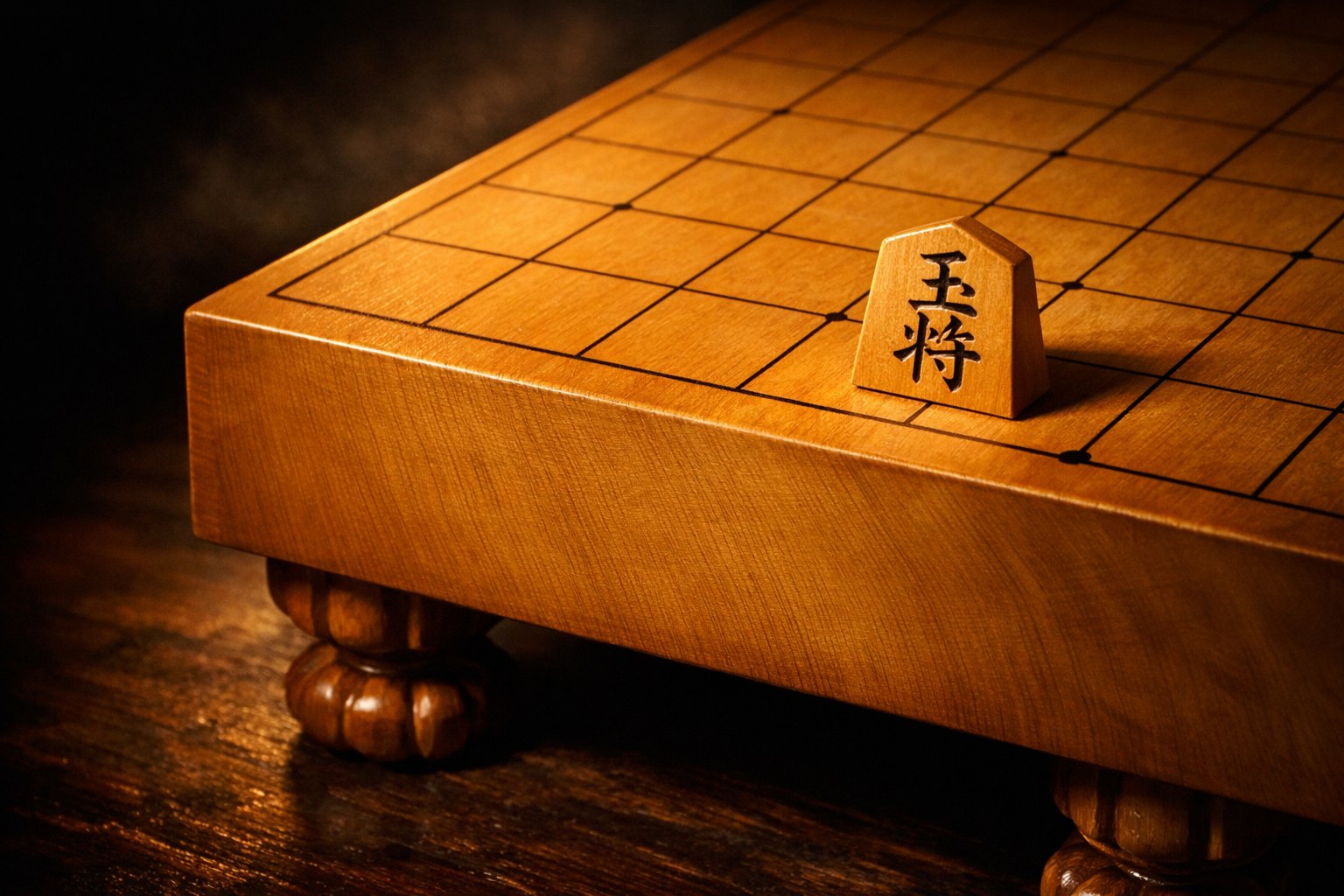
The pieces are flat pentagons, all the same colour: it is their orientation, with the point facing the opponent, that indicates which side they belong to. A typically Japanese sobriety, very different from the black and white pieces of Western chess.
Shogi pieces
Flat pentagons in light wood, often engraved or hand-calligraphed in ink. The distinction between sides lies solely in the orientation of the piece.
Western chess pieces
Turned, sometimes carved, figures in two contrasting shades of wood such as boxwood and ebony: each piece is recognisable by its shape as much as its colour.
Who starts a game of Shogi?
As in chess, only one player opens the game. He is called sente (“the one who plays first”), the other gote. As the pieces are identical for both sides, this role is not linked to a colour: it is traditionally determined by a toss using pawns (furigoma).
The rule that changes everything: dropping captured pieces
This is the feature that truly sets Shogi apart from every other chess variant: a captured piece never leaves the game. It changes side, joins the reserve of the player who took it, and can be dropped back onto any empty square instead of a normal move.
- Forbidden column: a pawn cannot be dropped on a column that already contains an unpromoted pawn of the same side.
- Forbidden mate: a pawn cannot be dropped if it delivers immediate checkmate.
- Unpromoted form: a dropped piece always reverts to its original form, even if it had been promoted before being captured.
Key point: in Shogi, a captured piece is never permanently lost. It can come back into play, on the opposing side, at any point in the game.
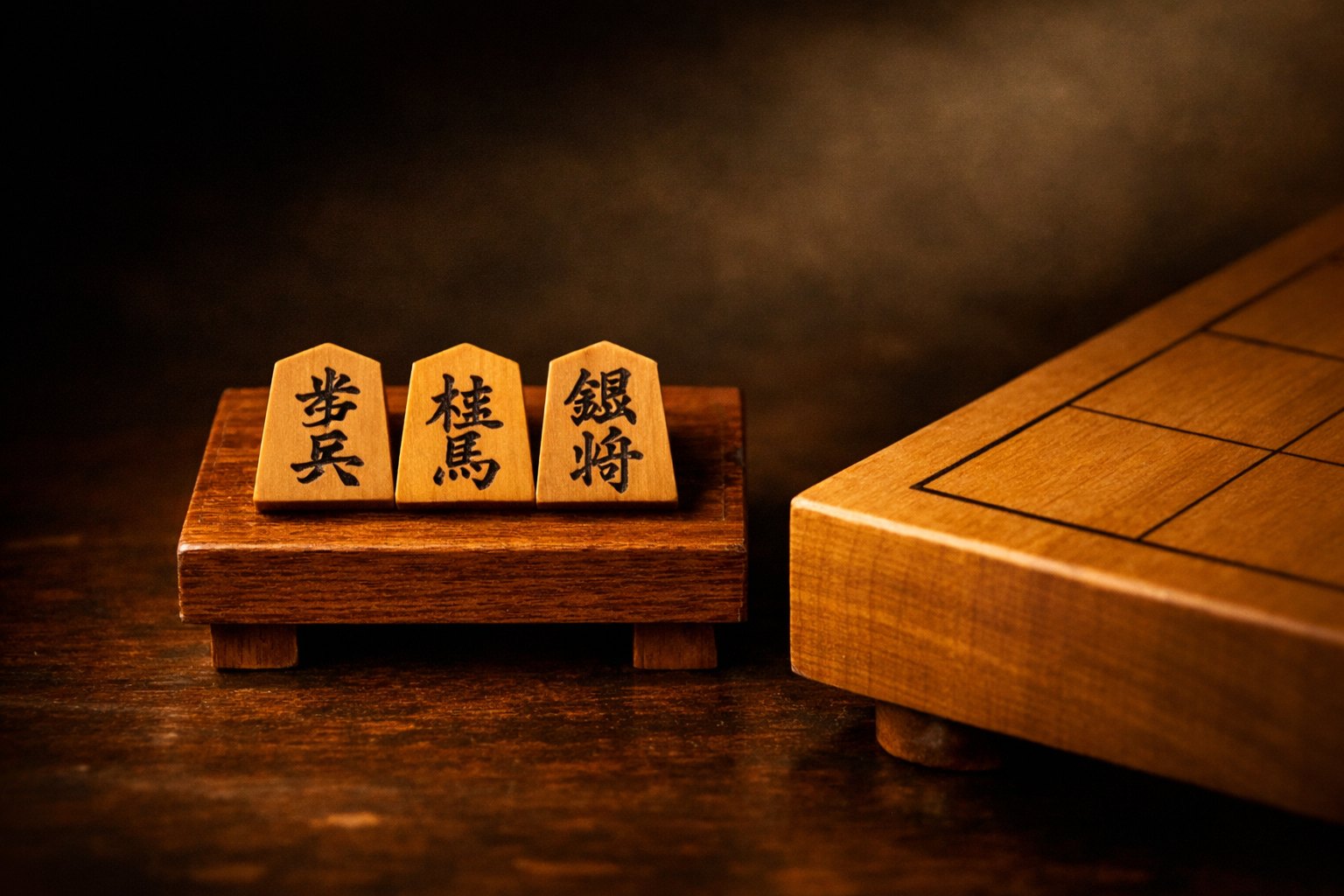
This mechanic changes the whole logic of the game: in Shogi, material never disappears, it constantly circulates between the two players. Games are therefore much more dynamic than in Western chess, and draws are extremely rare.
Shogi vs Western chess: 6 key differences
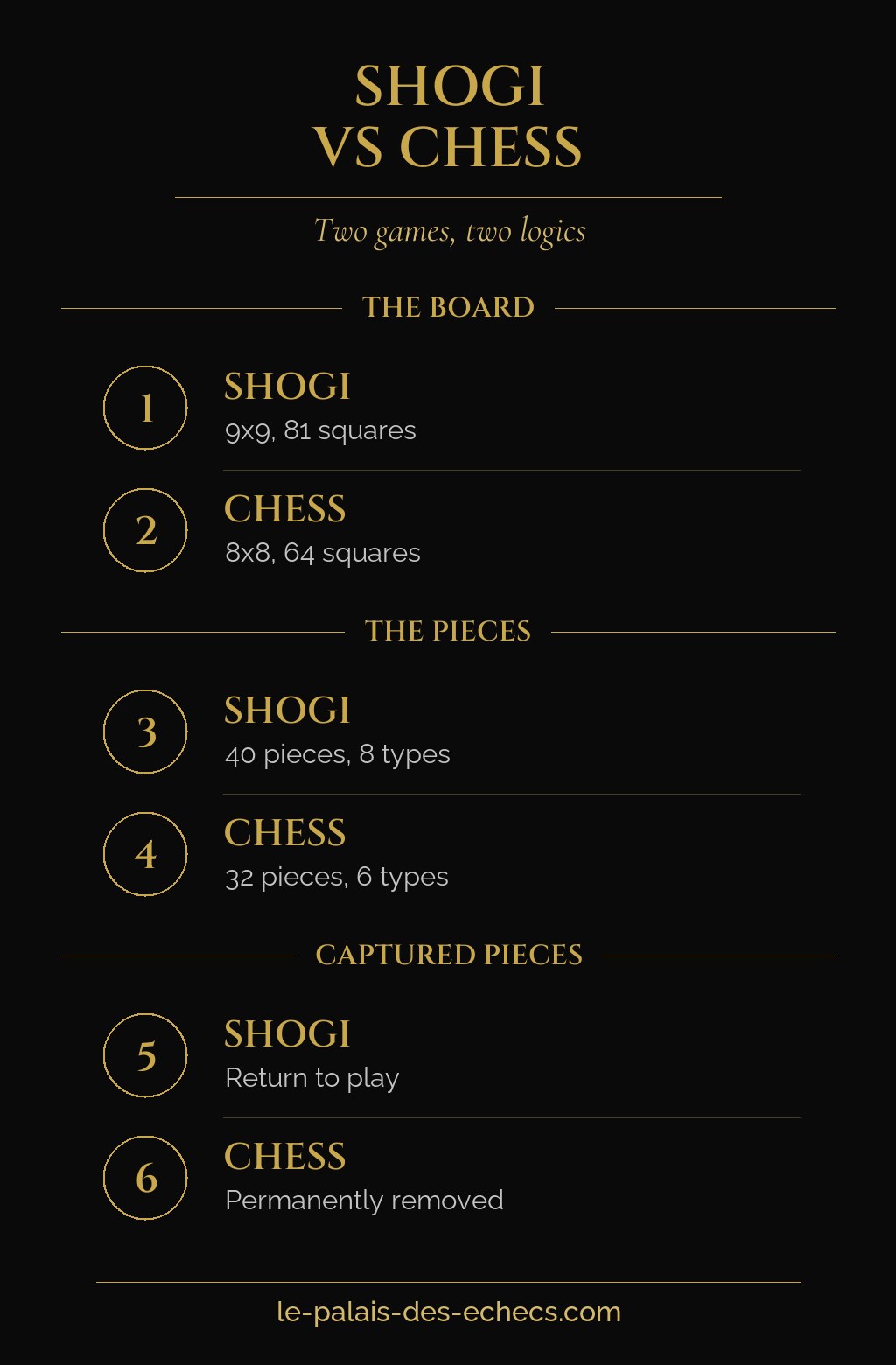
Shogi and chess share a common origin, but their rules have diverged on essential points: board size, number of pieces, the fate of captured pieces, promotion, how often draws occur, and even whether a piece equivalent to the queen exists at all.
| Criterion | Shogi | Western chess |
|---|---|---|
| Board | 9×9, 81 squares | 8×8, 64 squares |
| Number of pieces | 40 (20 per player) | 32 (16 per player) |
| Captured pieces | Join the reserve, can be dropped back into play | Removed permanently |
| Promotion | Within the last 3 rows, several pieces affected | On the last row, pawns only, to queen, rook, bishop or knight |
| Queen | Does not exist | The most powerful piece in the game |
| Draws | Extremely rare | Possible through stalemate, repetition or mutual agreement |
For another comparison of strategy games, our article draughts versus chess sets out the differences between these two classics. And unlike the Elo rating used in chess, which we cover in our guide to the Elo rating, amateur Shogi works on a system of kyu grades followed by dan grades.
The Japanese aesthetic of Shogi pieces and its influence on the art of the chessboard
Shogi pieces owe their beauty to their restraint: light wood, engraved or hand-calligraphed in ink, with no figurative carving. This discretion contrasts with the Western chess tradition, where the piece itself becomes a sculpted, sometimes inlaid object, enhanced with brass or precious wood.
Le Palais des Échecs does not offer Shogi sets: our sets follow the rules of Western chess. But the world of the samurai, that of the Edo period when Shogi took its modern form, has inspired several themed chess sets in our Orient & Asia collection: a link for the lover of Japanese culture who also plays chess.
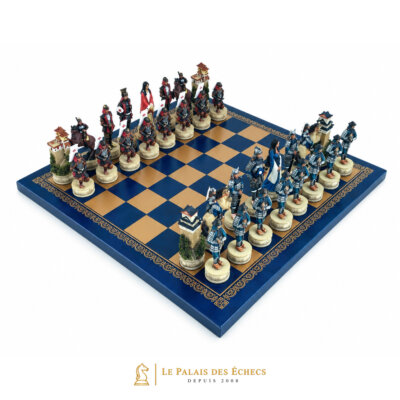
With its hand-painted samurai figures, its two opposing-colour armies and its rooks shaped like a Japanese castle, the Samurai Chess Set in resin transposes the world of feudal Japan onto a Western 64-square chessboard, in gold and blue faux leather. The same theme is also available in gold and silver-plated metal with the Samurai II Set and its chess board with built-in storage.
When it comes to precious woods, the Western tradition plays on contrast rather than restraint: dark ebony set against pale boxwood, as in the Highclere Set, whose ebony and boxwood pieces sit on a briar and elm wood chess board, with a golden rosewood storage box. Other combinations, such as the Rochester Set in walnut, maple, boxwood and ebony, or the Staunton Set in solid brass on a walnut and maple chess board, show the diversity of our finishes in ebony chess pieces or brass chess pieces.
To discover other worlds, from medieval times to ancient Egypt, our themed chess pieces category and our themed complete chess sets bring together our most distinctive collections, of which Orient & Asia is just one facet.
How to get started with Shogi today?
To learn Shogi without buying any equipment, the site Lishogi.org lets you play free online, against other players or against an engine. Shogi clubs also exist in France for those who wish to progress in person.
As in judo or Go, the amateur level in Shogi traditionally ranges from 10th kyu, for a beginner, up to 1st kyu, before moving on through the dan grades. Japanese professional players operate within their own hierarchy, from 4th to 9th dan. To compare the best platforms for playing chess online, see our comparison of free chess sites.
If you are drawn to the world of Shogi but prefer to stick with Western chess rules, more widespread in France, that has been the work of Le Palais des Échecs since 2008: more than 5,000 customers have trusted us for their wooden chess set, and our best-selling woods remain, in order, boxwood, maple, walnut, rosewood and then mahogany. For first steps on the chessboard, our guide why and how to learn to play chess is a good starting point.
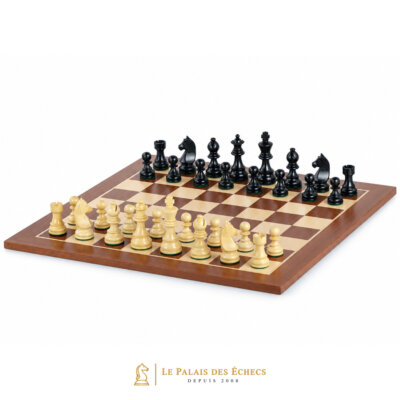
The Classic Staunton Set pairs ebony and boxwood pieces with a mahogany chess board: the benchmark pairing for tournament chess, for anyone who wants a tried-and-tested format.
To discover the whole of our range, browse our complete chess sets or our Other Games category, from backgammon to mahjong, another great game that came from Asia. And as in Shogi, chess competitions are played with a clock: our guide to using a chess clock explains the most common time controls.
Frequently asked questions
What are the basic rules of Shogi?
Shogi is played between two players, on a 9×9 square board, with 20 pieces per player: a king, a rook, a bishop, two gold generals, two silver generals, two knights, two lances and nine pawns. The aim is to checkmate the opponent’s king, as in Western chess, but any captured piece can be dropped back onto the board by its new side.
Who starts a game of Shogi?
Only one player opens the game, called sente; the other is the gote. As the pieces are identical for both sides, this role is not linked to a colour and is traditionally determined by a toss (furigoma) before the game.
What is the difference between Shogi and chess?
The major difference lies in the fate of captured pieces: in Western chess they are removed permanently, whereas in Shogi they change side and can come back into play. The board (9×9 versus 8×8), the number of pieces (40 versus 32) and the absence of a queen in Shogi are the other main differences.
How much does a Shogi set cost?
A beginner’s Shogi set, including a wooden board and pieces, typically costs between €50 and €120 from specialist retailers; versions with hand-calligraphed pieces command higher prices. Le Palais des Échecs does not sell Shogi sets, but offers many wooden Western chess sets at comparable budgets.
How do you learn to play Shogi?
The site Lishogi.org lets you play free online against other players or an engine. Shogi clubs also exist in France for learning with a physical board and progressing through the grading system, from kyu to dan.
What game does Shikamaru play in Naruto?
In the Naruto manga and anime, the character Shikamaru Nara is a keen Shogi player: he regularly uses it to illustrate his way of thinking several moves ahead, like a true strategist.
Delphine D., Le Palais des Échecs editorial team, a French shop specialising since 2008 in wooden chess sets and chess boards. Our guides are based on our customers’ questions, the official FIDE rules and the products we sell and measure ourselves. They are reviewed and updated regularly. The editorial team
Fancy a beautiful chess board, even if you don’t play Shogi?
Discover our chess sets in precious woods and our themed collections, designed for chess lovers as much as collectors.
Orient & Asia CollectionPieces in Precious WoodsChess Boards in Precious Woods
FIDE elects Timur Turlov president and backs an Elo rating for Chess960
At Samarkand, Timur Turlov was elected FIDE president as the body approved an official Elo [...]
Luxury chess board: a buying guide to high-end chess sets (onyx, marble, fine woods)
Onyx, marble, fine woods, metal: everything you need to know to choose a luxury chess [...]
Chess Puzzle No. 285: Can the white king really escape the net closing in?
Mate in 3 with the white king cornered — can you find the forced sequence [...]